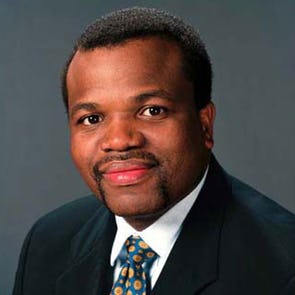
| Real Name | Makhosetive Dlamini |
|---|---|
| Net Worth 2026 | $100 million USD |
| Birthday (Year-Month-Day) | 1968-4-19 |
| Nationality | Swaziland |
| Occupation | Royalty |
| Height | m or 0 ft 0 inches |
| Weight | kg or 0 pounds |
| Marital Status | Married (Zena Mahlangu) |
| Ethnicity | Swazi |
| Education | Sherborne School |
| Kids | 12 |
| Kids Names | Sikhanyiso Dlamini, Temaswati Dlamini, Tiyandza Dlamini, Sibahle Dlamini, Majaha Dlamini, Bandzile Dlamini, Temtsimba Dlamini, Lindaninkosi Dlamini, Mcwasho Dlamini, Makhosothando Dlamini, Sakhizwe Dlamini, Saziwangaye Dlamini |
| Mswati III | |
|---|---|
| Ngwenyama | |
.jpg) Mswati in 2026 | |
| King of Eswatini | |
| Reign | 25 April 1986 – present |
| Coronation | 25 April 1986 |
| Predecessor | Sobhuza II |
| Queen Mother | Ntfombi |
| Born | Makhosetive Dlamini 19 April 1968 Raleigh Fitkin Memorial Hospital, Manzini, Swaziland Protectorate |
| Spouses | 16 wives concurrently
|
| House | Dlamini |
| Father | Sobhuza II |
| Mother | Ntfombi Tfwala |
| Religion | Christianity[1] |
| Signature |  |
Mswati III (born Makhosetive Dlamini; 19 April 1968)[2] is the Ngwenyama (King) of Eswatini and head of the Swazi royal family since 1986. He is the head of an absolute monarchy, holding executive authority over all branches of government and constitutionally immune from prosecution.[3][4] Along with his mother Queen Ntfombi, Mswati is the last remaining absolute monarch in Africa and one of twelve remaining absolute monarchs worldwide.[5]
Under the constitution, the king is commander-in-chief of the defence force and commissioner-in-chief of police and correctional services, and exercises influence over local government through traditional chiefs.[6][7] In 2018, Mswati promulgated a decree renaming the country from Swaziland to Eswatini, restoring its pre-colonial name.[8][9] Political activism and dissent are regulated under laws including those against sedition. Protests calling for political reform from 2021 onwards were dispersed and a number of activists were arrested.[10][11]
Eswatini faces significant economic challenges: in 2022, an estimated 32% of the population lived below the US$2.15/day international poverty line (measured by purchasing power parity in 2017) while 55% fell below the lower-middle-income country threshold of $3.65/day.[12] The government exercises influence over state broadcast media, while a growing number of independent online outlets operate in the country.[13]
Early life
Mswati III was born Makhosetive Dlamini on 19 April 1968 at Raleigh Fitkin Memorial Hospital, Manzini, as the son of Sobhuza II (who had 70 wives during his life of 82 years) and Ntfombi.[14][15]
When King Sobhuza II died on 21 August 1982, the Great Council of State (the Liqoqo) selected the 14-year-old prince Makhosetive to be the next king.[16]
Reign

Mswati was introduced as crown prince in September 1983 and was crowned king on 25 April 1986, six days after turning 18, making him the youngest reigning monarch in the world at the time.[17][18] He inherited an absolute monarchy from his father, who had ruled by decree since 1973 and banned all political parties.[19]
Mswati III is Africa's last absolute monarch in the sense that he has the power to choose the prime minister, other top government posts and top traditional posts. Despite his role in appointing such positions, Mswati is still required to get special advice from the queen mother and council when choosing positions such as prime minister; similarly, in matters of cabinet appointments, Mswati is advised by the prime minister. Mswati ruled by decree, but he chose to restore the nation's Parliament, which had been dissolved by his father in order to ensure concentration of power remained with the king. Parliamentarians are appointed either by Mswati himself (two-thirds of the senators and ten deputies) or elected by traditional chiefs close to power. Close to the evangelical churches, he banned divorce and the wearing of miniskirts.[20]
In an attempt to mitigate the HIV/AIDS pandemic in 2001, the king used his traditional powers to invoke a time-honoured chastity rite (umcwasho) under the patronage of a princess, which encouraged all Swazi maidens to abstain from sexual relations for five years. This was last done under Sobhuza II in 1971.[21] This rite banned sexual relations for Swazis under 18 years of age from 9 September 2001 to 19 August 2005. However, two months after imposing the ban, Mswati violated the decree by choosing a 17-year-old liphovela (royal fiancée) as one of his wives.[22]
In 2005, Mswati promulgated a new constitution, ending the state of emergency that had been in force since 1973.[19] The constitution allows for freedom of speech and assembly; according to Amnesty International, however, such freedoms are restricted in practice.[17]
On 19 April 2018, Mswati changed the name of the country from Swaziland to Eswatini to mark the year of its 50th anniversary of independence.[23] The name change coincided with his 50th birthday. Eswatini is the ancient, original name for the country, chosen as a departure from its colonial past.[24]
.jpg)
Mswati has visited Taiwan seventeen times as of June 2018, and has pledged to continue recognizing Taiwan instead of the People's Republic of China.[25]
Eswatini is predominantly rural and is one of the poorest countries in the world (63% of its population lives below the poverty line). An economic circle of 15,000 businessmen and politicians controls most of the country's wealth. This circle includes South African investors who have come to Eswatini to find labour at one-third the cost and a group of white businessmen who are heirs to the British settlers.[20]
In January 2021, Mswati contracted COVID-19, and he later thanked Taiwan for providing antiviral medication that helped with his recovery. Mswati did not disclose that he had been hospitalized until after his recovery.[26][27]
In June 2021, a series of protests broke out against authoritarianism and the suppression of opposition. The Communist Party of Swaziland alleged he had fled to South Africa on the night of 28–29 June, whereas the Swaziland Solidarity Network claimed he fled to Mozambique. Both of these claims were denied by acting prime minister Themba Nhlanganiso Masuku.[27][28]
Ruby Jubilee (2026)
On 25 April 2026, King Mswati III marked 40 years on the throne, his Ruby Jubilee, at a ceremony held at Somhlolo National Stadium in Lobamba, attended by foreign heads of state. Lesotho's King Letsie III led tributes on behalf of visiting dignitaries, describing the 40-year reign as a testament to selfless leadership and devotion to the Swazi people, and commending Mswati for guiding the kingdom through complex political, social and economic challenges over four decades.[29]
In his address, the King cited substantial national development over four decades, stating that Eswatini's GDP had grown from approximately 1.4 billion emalangeni at the time of his coronation to over 95 billion emalangeni, with manufacturing accounting for roughly 40 percent of GDP across key industries including agro-processing, textiles, sugar production and forestry. The road network expanded from about 500 kilometres in 1986 to over 2,000 kilometres.[30] Major infrastructure projects completed during the reign include King Mswati III International Airport, the Royal Science and Technology Park, the Mavuso Trade and Exhibition Centre, and the Ezulwini Palazzo International Convention Centre, which was officially opened on 26 April 2026. The King also cited empowerment programmes including the Regional Development Fund, which had disbursed over 1.4 billion emalangeni in non-refundable grants, and FINCORP, which had extended more than 10 billion emalangeni in loans to entrepreneurs and farmers.[30]
Healthcare
King Mswati III highlighted a substantial transformation in Eswatini's healthcare system over his reign, noting that the country had grown from approximately six hospitals and 162 clinics in the 1990s to 16 hospitals and over 330 health facilities by 2026, with a stated goal that no citizen should have to travel more than eight kilometres for health services.[31] Life expectancy in Eswatini rose from 32 years in 1986 to 65 years in 2026 according to figures cited during the Ruby Jubilee address.[31]
Eswatini became one of the first countries in the world to reach the UNAIDS 95-95-95 target, meaning 95 percent of people living with HIV know their status, 95 percent of those are on treatment, and 95 percent of those on treatment are virally suppressed, well ahead of the 2030 global deadline.[31] The King also announced that Eswatini was the first country in Africa to adopt lenacapavir, a long-acting injectable HIV prevention drug, and that mother-to-child HIV transmission had been brought below five percent.[31] On malaria, the King noted that Eswatini pioneered the End Malaria Fund initiative, launched in 2019, under which malaria cases dropped significantly. Social welfare gains cited during the period included the introduction of monthly grants and free healthcare for elderly citizens and people with disabilities, alongside a national housing programme and old-age homes.[31]
Ezulwini Palazzo
On 26 April 2026, King Mswati III officially opened the International Convention Centre (ICC) in Ezulwini, naming the facility Ezulwini Palazzo as part of the Ruby Jubilee celebrations. The opening brought together regional heads of state and dignitaries including South African President Cyril Ramaphosa, Lesotho's King Letsie III, King Misuzulu kaZwelithini of the Zulu Nation, Taiwan's Foreign Minister Lin Chia-lung, former Botswana President Ian Khama, former South African President Jacob Zuma and former Democratic Republic of the Congo President Joseph Kabila.[32]
The King announced that the facility would be operated by Palazzo Hospitality, a Dubai-based luxury hospitality management company best known for managing Palazzo Versace Dubai. The ICC features modern dining halls, fully equipped conference rooms, a 200-seater meeting space and a theatre designed for productions of international standard. The King described the facility as the fulfilment of a national vision conceived in the early 2000s to develop a world-class convention and hospitality hub. Regarding the name, the King noted that Ezulwini translates as "heaven" in siSwati and carries deep historical and spiritual significance, and that the area is associated with the Ezulwini Consensus, a position recognised within United Nations reform discussions. The hotel component of the complex was still under construction at the time of opening, with the convention centre opened first to begin generating revenue immediately.[32]
Taiwan relations (2026)
In May 2026, King Mswati III received Taiwan President Lai Ching-te at Mandvulo Grand Hall, with the two governments signing a Joint Communique to strengthen trade and cooperation between Eswatini and Taiwan.[33] The visit followed a diplomatic standoff in which China pressured several African countries, including Seychelles, Mauritius and Madagascar, to revoke airspace permits for Lai's aircraft, forcing the cancellation of an earlier trip that had been scheduled for 22 to 26 April 2026 to coincide with the King's Ruby Jubilee celebrations. The trip was rescheduled after what Lai described as careful arrangements by diplomatic and national security teams.[33] In response, China removed tariffs for all African countries while excluding Eswatini from the arrangement.[33] Eswatini remains Taiwan's only diplomatic ally on the African continent and one of just 12 states globally that maintain formal diplomatic relations with Taipei.
SADC Organ Chairpersonship (2026)
On 18 August 2026, King Mswati III assumed the chairpersonship of the SADC Organ on Politics, Defence and Security Cooperation during the 46th SADC Summit of Heads of State and Government, held at the Durban International Convention Centre in Durban, South Africa.[34] The Organ is responsible for coordinating regional efforts on politics, defence, security, peacebuilding and democratic governance.
Accepting the position, the King committed Eswatini to working with the SADC Secretariat and all member states to maintain continuity and ensure that regional decisions are implemented effectively. Key matters on the Organ's agenda include the ongoing conflict in the eastern Democratic Republic of the Congo, efforts to restore constitutional order in Madagascar, and regional security concerns in Mozambique.[34] Malawi handed over the chairpersonship to Eswatini after leading the Organ during the previous term. The 46th Summit was held under the theme "Translating SADC Vision 2050 into Action: Pathways Towards Solidarity, Equality and Shared Prosperity." South African President Cyril Ramaphosa also assumed the chairpersonship of SADC from Zimbabwean President Emmerson Mnangagwa for the 2026 to 2027 term.[34]
Also at the 46th Summit, King Mswati III signed an agreement to amend Article 33 of the SADC Treaty, which seeks to strengthen the regional bloc's framework for dealing with prolonged delays by member states in paying their financial subscriptions to SADC.[35] The King signed the agreement before the closing ceremony of the summit. Summit discussions focused on accelerating economic transformation through infrastructure development, industrialisation, agriculture, critical minerals, regional value chains and investment. Member states called for increased intra-regional trade in agricultural products, expanded youth participation through skills development and entrepreneurship, and greater participation by women in leadership and decision making across the region. Leaders also welcomed the approval of the SADC Tourism UNIVISA, expected to ease travel between participating countries and support economic growth. The summit considered the security situation in the Democratic Republic of the Congo, encouraged dialogue and the restoration of constitutional order in Madagascar, and commended Mozambique's efforts to combat terrorism. Regional preparedness for health and climate emergencies, including Ebola, Foot and Mouth Disease and climate shocks linked to the anticipated El Niño weather pattern, was also discussed. Zambia will host the 47th SADC Summit of Heads of State and Government.[35]
Address to the 81st UN General Assembly (2026)
On 23 September 2026, King Mswati III addressed the General Debate of the 81st session of the United Nations General Assembly in New York, held under the theme "Better together: 81 years and more for peace, development and human rights."[36] He called for permanent African representation on the United Nations Security Council, noting that Africa still had no permanent seat more than two decades after the adoption of the Ezulwini Consensus in 2005, and urged greater international support for African regional organisations engaged in conflict prevention, mediation and peacebuilding.[36] Referring to Eswatini's chairpersonship of the SADC Organ on Politics, Defence and Security Cooperation, he pledged to strengthen preventive diplomacy and mediation in the region and called on the UN to support decisions by regional bodies condemning unconstitutional changes of government.[36]
On development, the King said developing countries faced investment gaps running into trillions of dollars in pursuit of the Sustainable Development Goals, and called for Africa to move from exporting unprocessed raw materials towards industrialisation and value addition, citing the African Continental Free Trade Area as a platform for this shift. He said artificial intelligence was advancing faster than the capacity to govern it and called for responsible and accountable governance of emerging technologies.[36] On health, he urged action on unequal access to vaccines and medicines, support for local and regional pharmaceutical manufacturing in Africa, and World Health Organization backing for joint procurement of medicines by member countries of the East, Central and Southern African Health Community. He also called for climate justice, noting that Eswatini was experiencing one of the most severe El Niño episodes on record, and pointed to dam construction projects aimed at expanding irrigation in the lowveld.[36]
The King reaffirmed Eswatini's support for Taiwan, urging the UN to find ways to facilitate its substantive participation in UN meetings and activities, and expressed Eswatini's commitment to establishing a permanent UN presence in the country.[36]
Family and succession

As of 2024, Mswati had eleven wives in polygamous marriage and was thought to have twenty children.[37] The first two wives were chosen for him by national councillors. There are complex rules on succession. Traditionally the king is chosen through his mother as represented in the Swazi saying Inkhosi, yinkhosi ngenina, meaning "a king is king through his mother".[38]
Controversies
Mswati's reign has seen a number of constitutional and governmental changes, including the adoption of the 2005 constitution.[19] Critics, including the People's United Democratic Movement (PUDEMO)[39] have argued that these changes were intended to strengthen and perpetuate the traditional order.[40] His attendance at the May 2012 Sovereign Monarchs lunch, to celebrate the Diamond Jubilee of Queen Elizabeth II, drew criticism from human rights campaigners over concerns about his government's human rights record.[41]
Human rights reports by the United States Department of State have documented allegations of abuses by security forces during Mswati's reign, including torture, excessive use of force, extrajudicial killings, arbitrary arrest and detention, and unlawful searches and seizures of homes and property. The reports also described restrictions on freedom of speech, assembly and association, harassment of activists and journalists, and discrimination against groups including LGBT people, labour leaders and campaigners against child labour. According to the reports, the courts took little or no action against officials responsible for abuses.[42]
Mswati has faced accusations in international media that women were abducted to become his wives, most prominently in the case of Zena Mahlangu.[43][44] In 2000, he was reported to have called for parliament to debate whether HIV-positive people should be "sterilized and branded".[45]
Wealth

Mswati's personal and household spending has attracted criticism, particularly in the media, with some reports contrasting his lifestyle with the level of poverty in the country.[46][47] In the 2014 national budget, parliament allocated US$61 million to the royal household,[48] at a time when, according to the United Nations Development Programme, 63% of the population lived on less than US$1.25 per day.[49] Photography of the King's vehicles was banned following criticism of his purchase of luxury cars, including a DaimlerChrysler Maybach 62 reported to cost US$500,000.[50] Forbes estimated his personal wealth at US$200 million in its 2009 list of the world's richest royals.[51] In January 2004, the Times of Swaziland reported that the King had asked the government to spend about US$15 million to renovate three main palaces and build new residences for each of his thirteen wives.[52] The Prime Minister's Office responded in a statement describing the report as "reckless and untrue", saying the proposal was for the construction of five State Houses rather than palaces, at a cost of €19.9 million.[53] Later that year, approval was given for five new buildings at a cost of more than US$4 million in public funds.[54] In August 2008, hundreds of women marched through Mbabane to protest the cost of an overseas shopping trip taken by nine of the King's thirteen wives.[55] The demonstration was organised by Positive Living, a non-governmental organisation for Swazi women with AIDS, and protesters presented a petition to the Minister of Finance arguing that the money should have been spent differently.[55]
According to the International Consortium of Investigative Journalists, Mswati owns a collection of bespoke watches worth millions of US dollars.[4]
Mswati holds personal stakes in a large portion of Eswatini's economy, which the Daily Maverick identified as a factor in the country's below-average economic growth among Sub-Saharan African countries. As an absolute monarch, he has the power to dissolve parties and to veto any legislation passed by parliament.[45]
LaMahlangu controversy
According to Amnesty International, Zena Mahlangu, then an 18-year-old high school student, disappeared from her school in October 2002. Her mother, Lindiwe Dlamini, reported to police that her daughter had been taken by two men, Qethuka Sgombeni Dlamini and Tulujani Sikhondze. She was later told that her daughter was at Ludzidzini Royal Village and was being prepared to become the King's next wife.[56]
Under custom, a liphovela (royal fiancée) must not be a twin; Mahlangu has a twin brother, which reports noted would ordinarily make her ineligible.[57] Her mother took the matter to the High Court, where Attorney General Phesheya Dlamini intervened in the case.[43]
Honours

National
Grand Master of the Royal Order of King Sobhuza II (1986)[58] Grand Master of the Royal Order of the Great She-Elephant (2002) Grand Master of the Royal Order of the Crown (2002) Grand Master of the Royal Family Order of Mswati III (2002) Grand Master of the Military Order of Swaziland (2002) Grand Master of the Order of the Elephant (2018)[59]
Foreign
 United Kingdom: Knight of the Venerable Order of St John (11 November 1991)[60]
 South Africa: Knight Grand Cross of the Order of Good Hope (August 1995)[61][62]
See also
- Without the King, 2007 documentary film featuring Mswati III and his daughter Princess Sikhanyiso.
References
- ↑ "Swaziland". U.S. Department of State.
- ↑ Genealogy:SWAZILAND Archived 19 May 2018 at the Wayback Machine, World of Royalty
- ↑ "About the Swazi Secrets investigation - ICIJ". 15 April 2024.
- 1 2 "How international gold dealers exploited a tiny African kingdom's economic dream - ICIJ". ICIJ. 15 April 2024.
- ↑ "Armed forces open fire in crackdown on anti-monarchy protests in Eswatini". The Guardian. 29 June 2021. ISSN 0261-3077. Retrieved 31 August 2023.
- ↑ "Eswatini: Freedom in the World 2022 Country Report". Freedom House. Retrieved 31 August 2023.
- ↑ "Eswatini". United States Department of State. Retrieved 31 August 2023.
- ↑ "Swaziland king renames country 'the Kingdom of eSwatini'". BBC News. 19 April 2018. Retrieved 31 August 2023.
- ↑ "Times Of Swaziland". Times Of Swaziland. Retrieved 31 August 2023.
- ↑ "Human rights in Eswatini". Amnesty International. Retrieved 31 August 2023.
- ↑ Burke, Jason (24 January 2023). "Eswatini: murder of pro-democracy activist prompts outrage". The Guardian. ISSN 0261-3077. Retrieved 31 August 2023.
- ↑ "Overview". World Bank. Retrieved 31 August 2023.
- ↑ "Hall of infamy: King Mswati III". newint.org. 9 June 2023. Retrieved 22 April 2026.
- ↑ "King Mswati III is born". South African History Online. 19 April 1968. Retrieved 26 April 2014.
- ↑ "'Mother-in-law' sues Swazi king". BBC News. 17 October 2002.
- ↑ Simelane, Hamilton Sipho. (2005). "Swaziland: Reign of Mswati III," in Encyclopedia of African History, p. 1528.
- 1 2 "Five things you didn't know about human rights in Swaziland". Amnesty International. 28 May 2015. Retrieved 9 September 2022.
- ↑ Praderio, Caroline; Shaw, Gabbi. "16 of the youngest monarchs in history". Insider. Retrieved 9 September 2022.
- 1 2 3 "THULANI'S MURDER AND THE INTERSECTION OF OUR FEUDAL AND CAPITALIST SYSTEM". The Bridge. 1 February 2023.
- 1 2 Vicky, Alan (October 2018). "Africa's last absolute monarchy". Le Monde Diplomatique. Retrieved 19 November 2023.
- ↑ Kuipers, Ludo (10 March 2014). "The uMcwasho Ceremony in 1971". ozoutback.com.au. Cairns, Queensland, Australia: OzOutback. Retrieved 26 April 2014.
Photos of the umcwasho Ceremony in 1971, in which girls finish a period of moral restrictions and dance in front of the King.
- ↑ "Swazi king drops sex-ban tassels". BBC. 23 August 2005. Retrieved 29 January 2019.
- ↑ "Member States". UN.
- ↑ "King Renames Swaziland to its 'Ancient', Pre-Colonial Name". allAfrica.com. 20 April 2018.
- ↑ Hsu, Stacy (9 June 2018). "Swazi king promises loyalty to Taiwan". Taipei Times.
- ↑ "Eswatini king recovers from COVID, thanks Taiwan for sending drug". Al Jazeera English. 20 February 2021.
- 1 2 "Acting Prime Minister Themba Masuku appeals for calm, says King Mswati is in the country and still in control". The Eswatini New.
- ↑ McCain, Nicole. "WATCH: Protests rock eSwatini, govt denies reports that King Mswati fled". News24.
- ↑ Owolabi, Adekunle (24 April 2026). "King Letsie III leads tributes to King Mswati III". Swazi24.
- 1 2 Owolabi, Adekunle (24 April 2026). "King Mswati III marks 40 years on the throne". Swazi24.
- 1 2 3 4 5 Owolabi, Adekunle (25 April 2026). "From six hospitals to 16: King Mswati outlines Eswatini's health gains and HIV breakthroughs". Swazi24.
- 1 2 Owolabi, Adekunle (26 April 2026). "'Heaven' on earth: King names new ICC Ezulwini Palazzo". Swazi24.
- 1 2 3 Owolabi, Adekunle (2 May 2026). "King Mswati III receives Taiwan president after China attempted to block visit". Swazi24.
- 1 2 3 Owolabi, Adekunle (18 August 2026). "King takes SADC security organ chair". Swazi24.
- 1 2 Owolabi, Adekunle (18 August 2026). "King signs SADC treaty amendment". Swazi24.
- 1 2 3 4 5 6 Owolabi, Adekunle (24 September 2026). "King Mswati calls for stronger African voice at UN". The African Daily. Retrieved 24 September 2026.
- ↑ Kupemba, Danai Nesta (4 September 2024). "Daughter of South Africa's ex-President Jacob Zuma to wed Eswatini king 'for love'". BBC. Retrieved 1 February 2025.
- ↑ Hilda Kuper (1944). "A ritual of kingship among the Swazi". Journal of the International African Institute. 14 (5): 230–257.
- ↑ People's United Democratic Movement (PUDEMO); Dlamini, Ignatius Bonginkosi (31 July 2005). "PUDEMO rejects the Dlamini family constitution as it is meant to legitimize the continued oppression of our people by one family, King Mswati's family" (PDF). pudemo.org. Swaziland: PUDEMO. Retrieved 26 April 2014.[permanent dead link]
- ↑ Maroleng, Chris (26 June 2003). "Swaziland: The King's Constitution" (PDF). iss.co.za. Paris, France: European Union Institute for Security Studies. Archived from the original (PDF) on 8 August 2012. Retrieved 26 April 2014.
- ↑ The Daily Telegraph (18 May 2012). "King of Bahrain lunches with Queen as human rights storm rages". UK News. The Daily Telegraph. London, UK. ISSN 0307-1235. OCLC 49632006. Retrieved 26 April 2014.
- ↑ "Swaziland" (PDF). United States Department of State.
- 1 2 "Swaziland's Royal Bridal Mess". CBS News. 4 November 2002. Retrieved 29 August 2023.
- ↑ Grunwald, Michael (6 November 2002). "Changing What It Means to Be Swazi". Washington Post. ISSN 0190-8286. Retrieved 29 August 2023.
- 1 2 Davis, Rebecca (10 May 2013). "King Mswati to WEF: Swazi people don't want change". Daily Maverick.
- ↑ "King of Bahrain lunches with Queen as human rights storm rages". The Daily Telegraph. 18 May 2012. Retrieved 10 April 2013.
- ↑ King Mswati is Bankrupting Swaziland: Mornachy not for Africa! Archived 17 May 2012 at the Wayback Machine, Ole Africa
- ↑ King of impoverished Swaziland increases household budget to $61m, Agence France-Presse in Mbabane, 15 May 2014, The Guardian
- ↑ UNDP Archived 5 August 2014 at the Wayback Machine, About Swaziland
- ↑ Now only Mswati owns a Maybach! Archived 27 November 2012 at the Wayback Machine, City Press, 25 January 2009
- ↑ Serafin, Tatiana (17 June 2009). "The World's Richest Royals". Forbes.
- ↑ "king needs R100m for palaces for 13 wives". Cape Argus. South Africa. 13 April 2011. [permanent dead link]
- ↑ "The Issue of '€1 Million Spent on Princess Sikhanyiso' and The Issue of 'Building' Royal Palaces by Swaziland Government". Prime Ministers Office. 26 January 2004. Archived from the original on 26 November 2007. Retrieved 26 April 2014.
- ↑ "Swazi king gets go ahead for wives' palaces". Independent Online. 25 July 2004. Archived from the original on 30 April 2009. Retrieved 21 October 2009.
- 1 2 "Swazi anger at royal wives' trip". BBC News. 21 August 2008. Retrieved 28 July 2023.
- ↑ Amnesty International: "Swaziland: Human rights at risk in a climate of political and legal uncertainty,"Index No. AFR 55/004/2004. 29 July 2004.
- ↑ Wayua, Muli. "A king, his culture, his wives," Daily Nation (Nairobi, Kenya). 7 December 2002.
- ↑ "Decorations of Swaziland".
- ↑ "President Tsai meets King Mswati III of Swaziland, attends state banquet". Embassy of the Republic of China (Taiwan) in the Kingdom of Eswatini 駐史瓦帝尼王國大使館.
- ↑ "Page 17188: Issue 52712". London Gazette. 11 November 1991.
- ↑ 1995 National Orders Awards Archived 22 October 2012 at the Wayback Machine
- ↑ "Info.gov.za" (PDF).
Bibliography
Ginidza, Zodwa R. (1986). Umntfwana!: A Pictorial Biography of the New King of Swaziland. Swaziland: Macmillan Swaziland National Pub. Co. ISBN 978-0-333-40303-7 OCLC 16874145 Levin, Richard and Hugh MacMillan. (2003). "Swaziland: Recent History," in Africa South of the Sahara 2004. London: Routledge. ISBN 978-1-85743-183-4 Simelane, Hamilton Sipho. (2005). "Swaziland: Reign of Mswati III," pp. 1528-1530, in Encyclopedia of African History, Kevin Shillington, ed. London: CRC Press. ISBN 978-1-57958-245-6
External links
- Archived copy of "the Official Website of Swaziland Monarchy"
- Swazi King's Birthday features
- Swazi Royal Family Tree
- BBC News: Troubled King Mswati
- Swaziland king picks wife – BBC Video
- King Mswati III's address to the 63rd session of the United Nations General Assembly, 25 September 2008
- An Extravagant Ruler of a Modest Kingdom – New York Times Movie review
In Destitute Kingdom, Ruler Lives Like a King His Majesty King Mswati III at IMDb Without the king at IMDb
| Pre-modern Swaziland (until 1745) |
|  |
|---|---|---|
| Modern Swaziland (1745–1906) |
| |
| Paramount Chiefs under British rule (1903–1968) |
| |
| Kings of Swaziland (1968–2018) |
| |
| Kings of Eswatini (2018–present) |
| |
| tiNdlovukati (Queen Mother) |
| |
.svg)


| International | |
|---|---|
| National | |
| Other | |

Fact Sheet
- King Mswati III's real name is Makhosetive Dlamini
- King Mswati III is Swaziland
- King Mswati III works as a(n) Royalty
- King Mswati III celebrates their birthday on 4-19
- King Mswati III is 58 years old
- Is King Mswati III single or married? King Mswati III is Married (Zena Mahlangu)!
- Which school did King Mswati III go to? King Mswati III attended Sherborne School
- King Mswati III has 12 child/children
- King Mswati III childrens names are Sikhanyiso Dlamini, Temaswati Dlamini, Tiyandza Dlamini, Sibahle Dlamini, Majaha Dlamini, Bandzile Dlamini, Temtsimba Dlamini, Lindaninkosi Dlamini, Mcwasho Dlamini, Makhosothando Dlamini, Sakhizwe Dlamini, Saziwangaye Dlamini
FAQ
Tags: King Mswati III net worth 2026, 2026 net worth King Mswati III 2026, what is the 2026 net worth of King Mswati III , what is King Mswati III net worth 2026, how rich is King Mswati III 2026, King Mswati III wealth 2026, how wealthy is King Mswati III 2026, King Mswati III valuation 2026, how much money does King Mswati III make 2026, King Mswati III income 2026, King Mswati III revenue 2026, King Mswati III salary 2026, King Mswati III annual income 2026, King Mswati III annual revenue 2026, King Mswati III annual salary 2026, King Mswati III monthly income 2026, King Mswati III monthly revenue 2026, King Mswati III monthly salary 2026