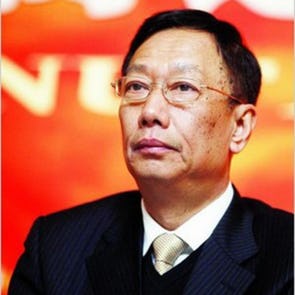
| Real Name | Terry Tai-Ming Gou |
|---|---|
| Net Worth 2026 | $6.61 billion USD |
| Birthday (Year-Month-Day) | 1950-10-8 |
| Nationality | Chinese |
| Occupation | Businessman; Founder and CEO of Foxconn |
| Height | m or 0 ft 0 inches |
| Weight | kg or 0 pounds |
| Marital Status | Married (Delia Tseng) |
| Ethnicity | Chines |
| Education | Taipei University of Marine Technology, Banqiao Senior High School |
| Kids | 4 |
| Kids Names | Gou Shou-shan, Gou Xiao-ru, Gou Shou-zheng, Gou Xiao-ling |
Terry Gou | |||||||||||||||||||||||
|---|---|---|---|---|---|---|---|---|---|---|---|---|---|---|---|---|---|---|---|---|---|---|---|
郭台銘 | |||||||||||||||||||||||
 Gou in 2019 | |||||||||||||||||||||||
| Born | 18 October 1950 Banqiao, Taiwan | ||||||||||||||||||||||
| Education | Taipei University of Marine Technology (BS) | ||||||||||||||||||||||
| Years active | 1974–present | ||||||||||||||||||||||
| Known for | Founder of Foxconn | ||||||||||||||||||||||
Political party | Kuomintang (1970–2000; 2019) Independent (2000–2019; 2019–) | ||||||||||||||||||||||
| Spouses | Serena Lin
(m. 1974; died 2005)Delia Tseng (m. 2008) | ||||||||||||||||||||||
| Children | 5 | ||||||||||||||||||||||
| Relatives | Sophie Chang (cousin) | ||||||||||||||||||||||
| Chinese name | |||||||||||||||||||||||
| Traditional Chinese | 郭台銘 | ||||||||||||||||||||||
| Simplified Chinese | 郭台铭 | ||||||||||||||||||||||
| |||||||||||||||||||||||
| Signature | |||||||||||||||||||||||
 | |||||||||||||||||||||||
Terry Gou[1] (Chinese: 郭台銘; pinyin: Guō Táimíng; born 18 October 1950) is a Taiwanese billionaire businessman and politician. He is the founder and former chairman and chief executive officer (CEO) of Foxconn, the world's largest contract manufacturer of electronics. As of 2024, Gou has a net worth of US$10.4 billion.[2]
Born in Banqiao, Taiwan, to waishengren parents, Gou founded Hon Hai Plastics Corporation, the predecessor of Hon Hai Precision Industry and Foxconn, in 1974. He expanded the company into computer engineering during the 1980s and established its first manufacturing facility in mainland China in 1988. Foxconn soon became a leading manufacturer of consumer electronics, particularly through its production of Apple's iPhone and other devices. His tenure was marked by rapid international expansion, including the 2016 acquisition of the Japanese electronics company Sharp Corporation.
Gou entered electoral politics in 2019, seeking the Kuomintang (KMT) nomination for the 2020 Taiwanese presidential election but losing the party's primary to Han Kuo-yu. He again sought the KMT nomination for the 2024 Taiwanese presidential election, but the party instead nominated Hou Yu-ih. Gou then announced an independent presidential campaign in August 2023, advocating economic development, closer dialogue with mainland China, and the reduction of cross-strait tensions. He qualified to stand as an independent candidate after collecting sufficient signatures but withdrew from the election in November 2023, before the registration deadline.
Early life
Gou was born on 18 October 1950 in Banqiao District, Taipei County (now New Taipei City), Taiwan.[3] His father, Guo Lingrui (郭齡瑞), and mother, Chu Yongzhen (初永真), married in Qingdao, Shandong, China, in 1946 before relocating to Taiwan.[4] Originally from Shanxi, his father had attended the Central Police Academy's Xi'an branch before beginning his police career in Qingdao.[5] After arriving in Taiwan, his father initially worked in anti-smuggling operations at Keelung Harbor before eventually returning to police work in Banqiao.[5]
Gou was raised in a small rented residence beside Banqiao Cihui Temple, a temple dedicated to the goddess Mazu.[6] The family relocated to police accommodation in Yonghe District following his father's reassignment to the area.[7] During part of his childhood, Gou lived with his maternal grandmother, who spoke a Shandong dialect.[8] The dialect became his first language, followed by Taiwanese Hokkien, which he learned while interacting with neighborhood children, and Mandarin Chinese, which he began learning after entering elementary school.[8]
Gou attended kindergarten in Banqiao at the age of five.[9] He then attended Puqian Elementary School as a member of its inaugural class before transferring to Banqiao Elementary School following a change in his father's police assignment.[8] He graduated from Banqiao Elementary School in 1962.[10] He then continued his education at the junior high school division of Banqiao High School.[11]
In 1966, Gou enrolled at China Maritime College (now Taipei University of Marine Technology), a recently established maritime vocational institution.[12] He graduated in 1972 with a degree in ship management.[13] To finance his education, he began working while still in junior high school, including taking overnight shifts at a rubber factory in Banqiao.[14] He also worked in grinding-wheel and pharmaceutical factories while supporting himself through part-time employment.[15]
After college, Gou completed compulsory military service as a reserve officer in the Republic of China Air Force, initially serving on Kinmen before being transferred to Ching Chuan Kang Air Base.[16] He spent one year and ten months in military service.[16] Following his discharge, Gou briefly worked in the shipping industry before establishing his own manufacturing business.[15]
Foxconn
Founding and early expansion (1974–1990s)
In 1974, Gou established Hon Hai Plastics Corporation (鴻海塑料企業有限公司), the predecessor of Hon Hai Precision Industry, in Taiwan.[17] He founded the company with US$7,500 borrowed from his mother and an initial workforce of eleven older employees.[18] The company's earliest products were inexpensive plastic components, including knobs for black-and-white televisions manufactured for an American television company based in Chicago.[18] Gou later recalled that his mother had obtained his initial startup funds through a rotating savings and credit association, known in Taiwan as a biaohui (標會).[19]
In 1980, the company secured a contract to manufacture joystick connectors for the American video game company Atari, an important early customer.[18] Hon Hai developed connectors for personal computers in 1981, marking its expansion beyond components for household appliances.[17] The following year, the company changed its name to Hon Hai Precision Industry (鴻海精密工業股份有限公司).[17] During the early 1980s, Gou undertook an eleven-month trip across the United States to solicit business from American technology companies, including IBM.[20] In 1985, Hon Hai established an American subsidiary as part of its expansion into the United States market.[17]
On 6 June 1988, Gou's company established its first manufacturing facility in mainland China in the Longhua area of Shenzhen, Guangdong Province.[21] Hon Hai then expanded its mainland manufacturing operations, including the development of a large industrial complex in Longhua that incorporated production facilities, worker dormitories, restaurants, markets, and recreational amenities.[22] Hon Hai became a publicly traded company on the Taiwan Stock Exchange on 18 June 1991.[23] In 1996, the company began developing its Longhua Science and Technology Park and expanded its manufacturing operations into personal computers and barebone computer systems.[17] By 2001, Hon Hai had become Taiwan's largest privately owned manufacturing enterprise by revenue.[24]
Partnership with Apple and manufacturing growth
Under Gou, Foxconn adopted a vertically integrated manufacturing strategy that emphasized producing components internally or purchasing them in large quantities while offering manufacturing and assembly services to other technology companies.[22] Rather than developing its own competing consumer electronics brands, he concentrated on original equipment manufacturer (OEM) services and long-term relationships with customers.[22] Foxconn also absorbed some initial tooling expenses for customers and sought to integrate component procurement, production, and logistics within its manufacturing operations.[22]
Foxconn's relationship with Apple Inc. initially involved supplying inexpensive electronic components, including connectors used in computers during the 1990s.[22] In 1999, Foxconn secured an order to manufacture the external enclosures for Apple's Power Macintosh G4 computers.[22] In 2000, the company won a contract to manufacture redesigned iMac computers.[18] Foxconn subsequently became a major producer of Apple's portable electronic devices, including the iPod and iPhone.[25] Gou worked directly with Apple's co-founder Steve Jobs during the development of the original iPhone.[18]
Foxconn's revenue increased from approximately US$1.8 billion in 1999 to US$98 billion in 2010, with its expanding business relationship with Apple accounting for much of that growth.[22] In addition to Apple, the company manufactured electronic products for major international technology brands, including Dell, Hewlett-Packard, Sony, and Amazon.[26] Foxconn eventually became China's largest private-sector employer, with a workforce numbering approximately 1.2 million people at its peak.[20]
Labor controversies

During Gou's tenure as chairman, Foxconn attracted international scrutiny over working conditions at its manufacturing facilities in mainland China.[20] In 2010, a series of worker suicides at the company's industrial complex in Shenzhen prompted concerns about employee welfare and the psychological pressures associated with factory work.[27] Labor campaigners criticized long working hours, low basic wages, and restrictions on social interaction during production shifts, although some employees said that Foxconn's wages and conditions compared favorably with those of other manufacturers.[27]
In May 2010, Gou visited Foxconn's Longhua facility and told reporters that he feared receiving news of further worker deaths.[27] He also apologized for a company document that had asked employees to agree that their families would not receive additional compensation in the event of a suicide, and announced that the document would be withdrawn.[27] Foxconn subsequently installed anti-suicide netting around factory and dormitory buildings, introduced counseling measures, and pledged salary increases for workers at the facility.[28]
In March 2012, an investigation conducted by the Fair Labor Association at three Foxconn factories found violations involving excessive overtime, inadequate compensation, and workplace health and safety risks.[29] Following the investigation, Foxconn and Apple agreed to reduce working hours, improve safety procedures, and address problems with employee compensation and accommodation.[30]
Acquisitions and international investments
In May 2015, Gou announced plans for Foxconn to develop between ten and twelve manufacturing and data-processing facilities in India by 2020, estimating that the proposed expansion could require several billion dollars in investment.[31] In August of that year, Gou and the government of Maharashtra announced an agreement under which Foxconn proposed investing US$5 billion over five years in an electronics manufacturing facility in the Indian state.[32]
Gou also led Foxconn's efforts to acquire the Japanese electronics manufacturer Sharp Corporation, which had experienced substantial financial difficulties.[33] In March 2016, Foxconn agreed to purchase approximately two-thirds of Sharp for US$3.5 billion after reducing an earlier offer following the disclosure of additional liabilities at the Japanese company.[33] The acquisition provided Foxconn with access to Sharp's advanced display technology and strengthened its position as a supplier to major electronics manufacturers, including Apple.[33]
Wisconsin manufacturing project

In July 2017, Gou joined U.S. President Donald Trump at the White House to announce a proposed US$10 billion Foxconn investment in a liquid-crystal display manufacturing facility in Wisconsin.[34] The proposed manufacturing campus was expected to cover approximately 20 million square feet and eventually employ as many as 13,000 workers.[34] In November 2017, Gou and Wisconsin Governor Scott Walker signed an agreement providing for up to US$3 billion in state tax incentives, contingent upon Foxconn meeting its investment and employment commitments.[35]
On 28 June 2018, Gou participated in a groundbreaking ceremony for the proposed manufacturing complex in Mount Pleasant, Wisconsin, alongside Trump, Walker, and other American political officials.[36] In January 2019, while Gou was still chairman, Foxconn announced that it was reconsidering its original plans to manufacture advanced LCD panels at the Wisconsin facility and might instead emphasize engineering and research operations.[37]
In April 2021, after Gou had relinquished the chairmanship, Foxconn and Wisconsin authorities renegotiated the agreement, reducing the company's planned investment from US$10 billion to US$672 million and its employment target from 13,000 to 1,454 jobs.[38]
Departure from management
In April 2019, Gou announced that he intended to step down as Foxconn's chairman to allow younger executives to assume greater leadership responsibilities.[39] On 21 June 2019, Foxconn announced that Young Liu, the head of its semiconductor business, would succeed Gou as chairman.[40] Gou also transferred responsibility for the company's daily operations to a newly established nine-member operations committee while retaining a seat on Hon Hai's board of directors.[40]
On 2 September 2023, Gou resigned from Foxconn's board of directors, shortly after he announced an independent candidacy in the 2024 Taiwanese presidential election.[41] Despite relinquishing his executive and board positions, Gou remained Foxconn's largest shareholder as of February 2024.[42]
Other business ventures
In 2019, Gou argued that Apple should move its manufacturing out of mainland China to Taiwan. The comments came after he confirmed he will step down from his role as Foxconn chairman.[43][44]
Gou is also the main owner of HMD Global, which is a company founded in 2016 to sell Nokia branded phones. HMD buys the R&D, manufacturing and distribution from FIH Ltd, which is part of Hon Hai group.
In April 2021, Gou became the biggest shareholder in the biotech company Eirgenix.[45] In December 2022, The Wall Street Journal reported that a letter from Gou helped convince the Chinese government to ease Zero-COVID restrictions amid the COVID-19 pandemic.[46]
Political career
Gou first joined the Kuomintang in 1970, but allowed his membership to lapse after 2000.[47] In the 2012 Taiwan presidential election, Gou endorsed Ma Ying-jeou,[48][49] stating that Ma was an "experienced, outstanding helmsman."[50] After Donald Trump won the 2016 United States presidential election, Gou was the subject of a spoof open letter in Bloomberg, in which author Tim Culpan was severely critical of Trump.[51] The article was mistakenly reported as having been written by Gou himself.[52]
Political views
An opponent of the Taiwan independence movement, Gou claims the Democratic Progressive Party (DPP) "exalts Taiwan independence and hates and opposes China".[53] His position is that Taiwan independence is not an issue.[54] Instead, he supports the 1992 Consensus under the one-China framework.[55][56]
In 2019, Gou expressed misgivings about the legalization of same-sex marriage in Taiwan, arguing that the Legislative Yuan did not respect the results of the 2018 referendum where a majority voted against legalization.[57]
2020 presidential election
From 2016, it was widely reported that Gou was considering a 2020 Taiwanese presidential bid,[58][59] and speculation continued into 2017.[60][61] He rejoined the Kuomintang in April 2019.[62] On 17 April 2019, Gou announced his intention to run in the Kuomintang primary for the 2020 presidential election.[63][64]
Gou declared that he had been instructed by the sea goddess Mazu in a dream to run as a candidate in the 2020 presidential election of the Republic of China.[65] He finished second in the 2019 Kuomintang presidential primary, with 27.7% of the vote. On 12 September 2019, Gou announced his withdrawal from the Kuomintang.[66][67] Four days later, Gou stated that he would not participate in the 2020 presidential election as an independent candidate.[68][69] Gou was offered the top position on the Taiwan People's Party party list for the 2020 legislative election, but declined such a bid.[70]
| 2019 Kuomintang Republic of China presidential primary results | ||||
|---|---|---|---|---|
| Candidates | Place | Result | ||
| Han Kuo-yu | Nominated | 44.81% | ||
| Terry Gou | 2nd | 27.73% | ||
| Eric Chu | 3rd | 17.90% | ||
| Chou Hsi-wei | 4th | 6.02% | ||
| Chang Ya-chung | 5th | 3.54% | ||
2024 presidential election
In April 2023, Gou announced he would run for President in the Taiwanese 2024 general election.[71] Polling conducted in January 2023 found him in second place in a hypothetical KMT primary with Hou Yu-ih, the Mayor of New Taipei, receiving 28.6% of the vote versus Hou's 36.7%.[72] Gou formally declared his independent presidential bid on August 28.[73] On September 2, Foxconn announced that Gou had resigned his position on the board of directors for personal reasons.[74]
On 14 September 2023, Gou announced as his running mate the actress and writer Lai Pei-hsia, also known as Tammy Lai.[75]
Gou officially qualified for the presidential election on 14 November 2023, when the signatures he had collected in order to run as an independent candidate were validated by Taiwan's Central Election Commission.[76] However, on 24 November 2023 he announced he was dropping out of the presidential race, and his name would not appear on the ballot.[77]
Public image
As a billionaire businessman and relative political outsider, Gou was compared to Trump in international media during his 2019 presidential candidacy.[78][79][80]
In 2007, Gou cited Genghis Khan as a personal hero.[81][82] Gou reportedly wears on his right wrist a beaded bracelet procured at a temple dedicated to the Genghis Khan.[83][81]
"Animal" management comment controversy
In 2012, a controversy arose after Gou jokingly compared Foxconn's workforce to animals during a company event at the Taipei zoo.[84][85] The Xinhua News Agency reported that while speaking on the challenges of presiding over a workforce with over one million employees, Gou stated that as "human beings are also animals, to manage one million animals gives me a headache."[86]
Foxconn defended Gou's comments, stating that "Mr. Gou did say that, since all humans are members of the animal kingdom, it might be possible to learn from [the Director of the Taipei Zoo, Chin Shih-chien] Mr. Chin's experience as his team looks for lessons that can be applied to business." Moreover, Foxconn clarified that Gou's comments were not discriminatory, explaining that "Mr. Gou's comments were directed at all humans and not at any specific group".[87]
Anti-Korean comment
In June 2012, Gou stated that he had "great esteem for Japanese (businessmen), especially those who are able to disagree with you in person and not stab you in the back, unlike the Gaoli bangzi". Gaoli bangzi is a racial slur for Korean people.[88]
Personal life
Gou and his first wife, Serena Lin (林淑如; Lín Shúrú; 1950–2005), have a son who works in the film and real estate industries and a daughter who worked in the financial sector.[89] Gou founded an educational charity with Lin in 2000 and intended to eventually give away one third of his wealth to charity.[90] After Gou's wife died, Gou's daughter assumed leadership in the charity.[89]
In the 1990s, Gou had an extramarital affair with Chen Chung-mei, a bar girl, who had a private investigator videotape her and Gou having sex in order to blackmail Gou for money. While Gou first agreed to pay the money, when they next met he had police arrest Chen and the private investigator, Hsu Ching-wei, and sued them for extortion, stating he knew the affair would become "exposed one way or another".[91]
In 2002, he bought a Roztěž castle near Kutná Hora in the Czech Republic for $30 million.[92]
In 2005, Serena Lin died of breast cancer at the age of 55.[93][94] Gou's younger brother, Tony Gou, died in 2007 of leukemia.[95][96] Also that year, Hsu Ching-wei accused Gou of having an affair during the 1990s.[97]
In 2007, Gou publicly pursued movie star Carina Lau. He confirmed to the media that their relationship had “just started” and that he was “serious” about her, greatly raising his public profile and marking the beginning of his emergence as a media personality. Lau responded by saying that Tony Leung, her long-time partner, was aware of the courtship. The relationship was ended by Lau.[98][99]
Gou married his second wife, choreographer Delia Tseng (born 1974) on 26 July 2008.[100] Tseng and Gou have three children.[101] Together, they have decided to give 90% of Gou's wealth away.[89]
Wealth
In 2016, Gou's net worth was US$5.6 billion.[102] By August 2017, Forbes listed his net worth at US$10.6 billion.[103] As of 2022, Gou had a net worth of US$6.8 billion, making him the sixth wealthiest person in Taiwan.[2]
References
- ↑ "Leadership's shared Vision". Foxconn. New Taipei City: Hon Hai Precision Industry Co., Ltd. Retrieved 12 July 2026.
- 1 2 Ho, Jane (29 May 2024). "Taiwan's 50 Richest". Forbes. Retrieved 12 November 2024.
- ↑ "Terry Gou Visits Cihui Temple to Pray for Peace, Says the Gods Should Decide Who Becomes Leader". Central News Agency (in Chinese (Taiwan)). 22 January 2023.
- ↑ "Terry Gou's Mother Helped the Kuomintang and Also Provided His Startup Capital". Central News Agency (in Chinese (Taiwan)). 26 October 2016.
- 1 2 Gou, Terry (10 August 2023). "Turning the Dining Table into a Bed and Working to Earn Living Expenses: Terry Gou Recalls His Childhood and His Father's Teachings". Cheers Magazine (in Chinese (Taiwan)). CommonWealth Magazine Group.
- ↑ "Terry Gou Calls for Support for a Police Officer's Son to Become President". Central News Agency (in Chinese (Taiwan)). 12 June 2019.
- ↑ Lin, Yi-chang (13 April 2008). "Terry Gou's Former Residences Become Selling Points for Property Developers". Liberty Times (in Chinese (Taiwan)).
- 1 2 3 Liao, Yi-ching (27 November 2008). "Terry Gou and Stanley Yen Share Memories of Their Childhoods". Business Today (in Chinese (Taiwan)).
- ↑ "Terry Gou Returns to His Alma Mater, Banqiao Elementary School". Central News Agency (in Chinese (Taiwan)). 9 March 2019.
- ↑ "Terry Gou Attends Banqiao Elementary School's 120th Anniversary Celebration and Hopes for Another Taiwanese Billionaire". Mirror Media (in Chinese (Taiwan)). 9 March 2019.
- ↑ Ku, Tsai-yen (6 May 2006). "Banqiao High School Anniversary Reveals Terry Gou's Graduation Photograph for the First Time". TVBS News (in Chinese (Taiwan)).
- ↑ "Profile of Taiwanese Business Leaders: Terry Gou, a Self-Made Billionaire". China News Service (in Chinese (China)). People's Daily Online. 31 August 2011.
- ↑ "Distinguished Alumni of Previous Years". Taipei University of Marine Technology (in Chinese (Taiwan)). Office of Academic Affairs, Taipei University of Marine Technology.
- ↑ ""Having Nothing Is an Advantage in Life": Terry Gou Recalls His Early Struggles in Commencement Address". Business Today (in Chinese (Taiwan)). 10 June 2023.
- 1 2 Cheng, Hung-ta (28 August 2023). "2024 Presidential Election: Terry Gou Takes His Biggest Step from Business into Politics". Business Today (in Chinese (Taiwan)).
- 1 2 Chiu, Ming-yu (17 June 2019). "Exclusive Interview with Terry Gou: Developing Financial Management Skills During Military Service". NOWnews (in Chinese (Taiwan)).
- 1 2 3 4 5 "From Connectors to the World's Leading Electronics Manufacturing Services Company: The Rise of Hon Hai". Economic Daily News (in Chinese (Taiwan)). 20 July 2023.
- 1 2 3 4 5 Blanchard, Ben; Lee, Yimou (30 August 2023). "Terry Gou, the man who made iPhones, bids again to be Taiwan president". Reuters – via Yahoo! News.
- ↑ "Terry Gou Recalls Founding His Business: His First Startup Funds Came from His Mother's Rotating Savings Association". Central News Agency (in Chinese (Taiwan)). 17 July 2016 – via Industrial Economics and Knowledge Center.
- 1 2 3 Campbell, Charlie (11 July 2019). "Foxconn Founder Terry Gou Wants to Be Taiwan's President—and a Go-Between for U.S. and China". Time.
- ↑ Chen, Celia (14 June 2018). "Foxconn Looks to AI After Maker of Apple and Amazon Products Celebrates 30 Years in China". South China Morning Post.
- 1 2 3 4 5 6 7 McGee, Patrick (30 March 2026). "The Origin Story of Apple's Long-Running Relationship with Foxconn". The Verge.
- ↑ "Hon Hai Precision Industry Co., Ltd.: Company Information" (PDF). Taiwan Stock Exchange. Taiwan Stock Exchange Corporation.
- ↑ "Key Milestones". Hon Hai Technology Group. Hon Hai Precision Industry.
- ↑ "Apple's China Detox Is Painful and Overdue". Reuters. 13 May 2025.
- ↑ Chiu, Karen (16 April 2019). "Terry Gou, the Man Who Built the Manufacturing Empire for iPhones and Kindles". South China Morning Post.
- 1 2 3 4 Branigan, Tania (27 May 2010). "Tenth Apparent Suicide at Foxconn iPhone Factory in China". The Guardian.
- ↑ Watts, Jonathan (28 May 2010). "Foxconn Offers Pay Rises and Suicide Nets as Fears Grow over Wave of Deaths". The Guardian.
- ↑ Williams, Matt (29 March 2012). "Foxconn Audit Finds Illegal Overtime and Unpaid Wages at Apple Factory". The Guardian.
- ↑ Gupta, Poornima; Chan, Edwin (30 March 2012). "Apple, Foxconn to Revamp China Work Conditions". Reuters – via Canadian HR Reporter.
- ↑ Carsten, Paul (26 May 2015). "Foxconn Plans 10–12 New Indian Facilities by 2020: Chairman". Reuters – via Business Standard.
- ↑ "Taiwan's Foxconn Plans $5 Billion Investment over Five Years in Indian Facility". Reuters. 8 August 2015.
- 1 2 3 Yamazaki, Makiko; Wu, J. R. (30 March 2016). "Foxconn Agrees to Buy Sharp After Slashing Original Offer". Reuters.
- 1 2 Shepardson, David (27 July 2017). "Foxconn Announces U.S. Manufacturing Plant in Wisconsin". Reuters – via Business Standard.
- ↑ "Walker, Foxconn Leader Sign Historic Wisconsin Contract". Wisconsin Public Radio. 10 November 2017.
- ↑ Huang, Elaine (9 July 2018). "Foxconn Breaks Ground in Wisconsin". CommonWealth Magazine.
- ↑ Yu, Jess Macy; Plume, Karl (30 January 2019). "Exclusive: Foxconn Reconsidering Plans to Make LCD Panels at Wisconsin Plant". Reuters – via Business Standard.
- ↑ Shepardson, David; Pierog, Karen (20 April 2021). "Foxconn Mostly Abandons $10 Billion Wisconsin Project Touted by Trump". Reuters.
- ↑ Lee, Yimou (16 April 2019). "Foxconn Chairman Gou Aims to Step Down to Pave Way for Younger Talent". Reuters – via Yahoo! News.
- 1 2 Lee, Yimou (21 June 2019). "Foxconn Picks Chip-Unit Head for Chairman, as Gou Seeks Taiwan Presidency". Reuters – via Yahoo! Finance.
- ↑ "Terry Gou, Seeking Taiwan Presidency, Resigns from Foxconn Board". Reuters. 2 September 2023 – via Voice of America.
- ↑ Blanchard, Ben (21 February 2024). "Foxconn Founder Terry Gou Makes First High Profile Appearance in Months". Reuters.
- ↑ Porter, Jon (21 June 2019). "Foxconn founder urges Apple to move production from China to Taiwan". The Verge. Archived from the original on 22 June 2019. Retrieved 22 June 2019.
- ↑ "Foxconn's Billionaire Founder Urges Apple to Invest in Taiwan". www.bloomberg.com. 21 June 2019. Retrieved 22 June 2019.
- ↑ "Foxconn founder invests in biotech firm". DIGITIMES. 9 April 2021. Retrieved 13 May 2021.
- ↑ Zhai, Keith; Jie, Yang (8 December 2022). "Letter From Apple Supplier Foxconn's Founder Prodded China to Ease Zero-Covid Rules". The Wall Street Journal. Retrieved 5 April 2023.
- ↑ Yu, Hsiang; Liu, Kuan-ting; Wang, Cheng-chung; Fan, Cheng-hsiang; Kao, Evelyn (17 April 2019). "KMT welcomes Terry Gou's presidential bid". Central News Agency. Archived from the original on 17 April 2019. Retrieved 17 April 2019.
- ↑ Ruhala, Emily (12 January 2012). "Taiwan Re-Elects President Ma, Bolstering Ties to China". Time. Archived from the original on 2 February 2017. Retrieved 27 January 2017.
- ↑ Kwong, Robin (14 January 2012). "Ma Ying-jeou wins Taiwan election". Financial Times. Archived from the original on 2 February 2017. Retrieved 27 January 2017.
- ↑ "Profile: Ma Ying-jeou". BBC. 14 January 2012. Archived from the original on 28 January 2016. Retrieved 27 January 2017.
- ↑ Culpan, Tim (7 December 2016). "Dear Mr. Trump, About Those U.S. IPhones". Bloomberg. Archived from the original on 2 February 2017. Retrieved 27 January 2017.
- ↑ Shinde, Jayesh (8 December 2016). "Trump Gets Trolled by the Man Who 'Really Makes' The iPhones & It's So Honest, It's Hilarious". India Times. Archived from the original on 2 February 2017. Retrieved 27 January 2017.
- ↑ Hoskins, Peter (5 April 2023). "Terry Gou: Foxconn founder in fresh run for Taiwan presidency". BBC News. Retrieved 7 April 2023.
- ↑ "Taiwan independence not an issue: Presidential hopeful Terry Gou". Taiwan News. 13 May 2023.
- ↑ Gou, Terry (17 July 2023). "Opinion: Taiwan abandoning the one-China framework aggravates the risk of war". Washington Post. Retrieved 28 July 2023.
- ↑ "Gou supports 'consensus' - Taipei Times". www.taipeitimes.com. 10 May 2019.
- ↑ Lin, Adela; Ellis, Samson (16 May 2019). "Taiwan Lays Down Historic Marker for Same-Sex Marriage in Asia". Bloomberg. Retrieved 6 April 2023.
- ↑ "Pundits tap Terry Gou for 2020 presidential candidate". China Post. 16 November 2016. Archived from the original on 2 February 2017. Retrieved 27 January 2017.
- ↑ "Hon Hai chairman hints at presidential aspiration". Taipei Times. 17 November 2016. Archived from the original on 2 February 2017. Retrieved 27 January 2017.
- ↑ Chou, Christine (19 January 2017). "Business group head voices his support for Terry Gou bid". China Post. Archived from the original on 10 April 2017. Retrieved 27 January 2017.
- ↑ "KMT's Chan outlines presidential bid". Taipei Times. 27 January 2017. Archived from the original on 26 January 2017. Retrieved 27 January 2017.
- ↑ Yu, Hsiang; Liang, Pei-chi; Wang, Hong-kuo; Kao, Evelyn (17 April 2019). "Terry Gou touts willingness to run in KMT presidential primary". Central News Agency. Archived from the original on 17 April 2019. Retrieved 17 April 2019.
- ↑ Shih, Hsiao-kuang; Hetherington, William (18 April 2019). "Hon Hai's Gou officially enters presidential race". Taipei Times. Archived from the original on 18 April 2019. Retrieved 18 April 2019.
- ↑ Everington, Keoni (17 April 2019). "Breaking News: Foxconn tycoon Terry Gou announces bid for Taiwan presidency". Taiwan News. Archived from the original on 18 April 2019. Retrieved 18 April 2019.
- ↑ Debby Wu (17 April 2019). "Foxconn's Gou Runs for Taiwan President, Citing Message From Sea Goddess". Bloomberg. Archived from the original on 17 April 2019. Retrieved 19 April 2019.
- ↑ Yu, Hsiang; Wang, Flor (12 September 2019). "Terry Gou quits KMT, paving way for possible independent run (update)". Central News Agency. Archived from the original on 13 September 2019. Retrieved 12 September 2019.
- ↑ Wang, Flor; Liang, Pei-chi (12 September 2019). "KMT decries Gou's decision to break away". Central News Agency. Archived from the original on 13 September 2019. Retrieved 12 September 2019.
- ↑ Maxon, Ann (17 September 2019). "Terry Gou drops presidential bid". Taipei Times. Archived from the original on 18 September 2019. Retrieved 17 September 2019.
- ↑ Wang, Cheng-chung; Hsu, Elizabeth (16 September 2019). "Terry Gou decides not to run for presidency". Central News Agency. Archived from the original on 17 September 2019. Retrieved 16 September 2019.
- ↑ Liang, Pei-chi; Wang, Cheng-chung; Hsu, Elizabeth (30 September 2019). "Ko wants tycoon to be legislative candidate for his party". Central News Agency. Archived from the original on 30 September 2019. Retrieved 30 September 2019.
- ↑ "Foxconn founder Gou says he will seek Taiwan presidency". Reuters. 5 April 2023. Retrieved 5 April 2023.
- ↑ Lin, Liang-sheng; Chung, Jake (18 January 2023). "Poll predicts tight contest between Lai, Hou and Ko - Taipei Times". Taipei Times. Retrieved 5 April 2023.
- ↑ Chung, Yu-chen (28 August 2023). "ELECTION 2024/Terry Gou jumps into 2024 presidential race as independent candidate". Central News Agency. Retrieved 29 August 2023.
Terry Gou (郭台銘), founder of the Taiwan-based manufacturing giant Hon Hai Precision Industry Co., announced Monday that he will run for president in 2024 on an independent ticket.
- ↑ Wu, Jeffrey; Lo, James (2 September 2023). "Terry Gou resigns from Hon Hai board of directors". Central News Agency. Retrieved 3 September 2023.
Business tycoon Terry Gou (郭台銘) has resigned from his position as a member of the Hon Hai Precision Industry Co. board of directors, the company announced Saturday. In a press statement released late Saturday, Hon Hai, better known as Foxconn globally, announced that Gou resigned from his post for "personal reasons."
- ↑ "Gou names Tammy Lai as running mate". Taipei Times. 15 September 2023. Retrieved 15 November 2023.
- ↑ "Hon Hai founder Terry Gou qualifies to run for president". Taipei Times. 15 September 2023. Retrieved 15 September 2023.
- ↑ "Election 2024/Business tycoon Terry Gou drops out of presidential race". Focus Taiwan: CNA English News. 24 November 2023. Retrieved 24 November 2023.
- ↑ Nakazawa, Katsuji (19 September 2019). "Foxconn's Terry Gou drops bid to be Taiwanese Donald Trump". Nikkei Asia. Retrieved 7 April 2023.
- ↑ Griffiths, James (18 April 2019). "A goddess inspired a Taiwanese billionaire to follow Trump's example". CNN. Retrieved 7 April 2023.
- ↑ Hille, Kathrin (19 April 2019). "Terry Gou, Taiwan's disrupter-in-chief moves into politics". Financial Times. Retrieved 7 April 2023.
- 1 2 Dean, Jason (11 August 2007). "The Forbidden City of Terry Gou". The Wall Street Journal. Archived from the original on 14 May 2008. Retrieved 17 April 2026.
- ↑ Carr, Austin (6 February 2019). "Inside Wisconsin's Disastrous $4.5 Billion Deal With Foxconn". Bloomberg. Archived from the original on 10 February 2019. Retrieved 5 April 2023.
- ↑ Leonard, Andrew (14 August 2007). "Learning from Genghis Khan and the Qianlong Emperor". How the World Works. Salon.com. Archived from the original on 26 July 2008. Retrieved 17 April 2026.
- ↑ Greenfield, Rebecca (20 January 2012). "Foxconn Chief's Unfortunate Animal-Worker Comparison". The Atlantic Wire. Archived from the original on 23 January 2012. Retrieved 17 April 2026.
- ↑ Kwong, Robin (20 January 2012). "Terry Gou: Managing "1m animals" [updated with Foxconn statement]". Financial Times. Archived from the original on 24 January 2012. Retrieved 17 April 2026.
- ↑ Markoff, John (19 August 2012). "Skilled Work, Without the Worker". The New York Times. ISSN 0362-4331. Retrieved 17 April 2026.
- ↑ Biggs, John (20 January 2012). "Foxconn Responds To CEO's "Employees Are Animals" Comment". TechCrunch. Retrieved 7 April 2023.
- ↑ "郭台銘:與夏普合作有信心打敗三星". Chosun Ilbo. 20 June 2012. Retrieved 30 September 2012.
- 1 2 3 Otsuki, Tomohiro (9 April 2016). "The real face of Terry Gou". Nikkei Asian Review. Archived from the original on 2 February 2017. Retrieved 27 January 2017.
- ↑ Dean, Jason; Tsai, Ting-I (27 May 2010). "Apple Investigating Foxconn's Steps to Deal With Suicides". The Wall Street Journal. Archived from the original on 19 September 2019.
- ↑ George Liao, Taiwan News Staff Reporter (23 April 2007). "Gou speaks up on Chen affair". Archived from the original on 5 August 2018. Retrieved 5 August 2018.
- ↑ Dean, Jason (12 August 2007). "The Forbidden City of Terry Gou". Wall Street Journal.
- ↑ Balfour, Frederik; Culpan, Tim (9 September 2010). "The Man Who Makes Your iPhone". Bloomberg. Archived from the original on 2 February 2017. Retrieved 27 January 2017.
- ↑ "Hon Hai boss' wife dies". Taipei Times. 14 March 2005. Archived from the original on 2 February 2017. Retrieved 27 January 2017.
- ↑ "Kuo Tai-cheng passes on". Taipei Times. 5 July 2007. Archived from the original on 2 February 2017. Retrieved 27 January 2017.
- ↑ Dean, Jason (11 August 2007). "The Forbidden City of Terry Gou". The Wall Street Journal. Archived from the original on 1 December 2016. Retrieved 27 January 2017.
- ↑ Hsiang, Cheng-chen; Hsu, Sheng-mei; Lin, Cheng-chih (22 April 2007). "Hon Hai chairman dismisses rumors of affair". Taipei Times. Archived from the original on 5 August 2017. Retrieved 27 January 2017.
- ↑ 東風衛視 (26 March 2019), 【精華版】五個字成關鍵?!她爆劉嘉玲情斷郭台銘秘辛, archived from the original on 11 December 2024, retrieved 7 July 2024
- ↑ "郭台銘證實 曾考慮娶劉嘉玲、陳香吟". Archived from the original on 8 October 2020. Retrieved 1 August 2019.
- ↑ "Tycoon Gou gets a better half, marries girlfriend". China Post. 27 July 2008. Archived from the original on 30 January 2017. Retrieved 27 January 2017.
- ↑ Chung, Jalen; Wu, Jeffrey (11 November 2014). "Taiwan tycoon Terry Gou thrilled by birth of fifth child". Central News Agency. Archived from the original on 2 February 2017. Retrieved 27 January 2017.
- ↑ "Tsai Eng-meng loses US$2.9bn, still tops list". Taipei Times. 5 March 2016. Archived from the original on 2 February 2017. Retrieved 27 January 2017.
- ↑ "Terry Gou". Forbes. Archived from the original on 14 September 2019. Retrieved 27 July 2017.
External links
- Hon Hai Precision
- Yonglin.org.tw, his charity organization
| People |  | |
|---|---|---|
| Subsidiaries | ||
| Products | ||
| Plants | ||
| Incidents | ||
| International | |
|---|---|
| National | |
| Other | |

Fact Sheet
- Wondering what Terry Gou's real name is? Terry Gou's real name is Terry Tai-Ming Gou
- Terry Gou's nationality is Chinese
- Terry Gou is a(n) Businessman; Founder and CEO of Foxconn
- Terry Gou was born on 1950-10-8
- How old is Terry Gou? Terry Gou is 76 years old
- Is Terry Gou single or married? Terry Gou is Married (Delia Tseng)!
- Where did Terry Gou go to school? Terry Gou is a graduate of Taipei University of Marine Technology, Banqiao Senior High School
- Terry Gou has 4 child/children
- Terry Gou childrens names are Gou Shou-shan, Gou Xiao-ru, Gou Shou-zheng, Gou Xiao-ling
FAQ
Tags: Terry Gou net worth 2026, 2026 net worth Terry Gou 2026, what is the 2026 net worth of Terry Gou , what is Terry Gou net worth 2026, how rich is Terry Gou 2026, Terry Gou wealth 2026, how wealthy is Terry Gou 2026, Terry Gou valuation 2026, how much money does Terry Gou make 2026, Terry Gou income 2026, Terry Gou revenue 2026, Terry Gou salary 2026, Terry Gou annual income 2026, Terry Gou annual revenue 2026, Terry Gou annual salary 2026, Terry Gou monthly income 2026, Terry Gou monthly revenue 2026, Terry Gou monthly salary 2026